Blog Postings

The postings will be introductions to each of my life lists. The lists themselves will appear in the side margin. I shall do some postings about particular localities and there will also be postings to provide updates every time I add a new species.
Please note that I am not qualified in any aspect of natural history - there will therefore be occasional (or, apparently, in the case of the hoverflies, a lot of) errors.

Wednesday, 15 August 2012

Where I am now

   My life did not come to an end on Friday 23rd March 2012 (as one one-time reader of one of my blogs surmised).  Nor did my photography or interest in natural history stop.  It is simply that I couldn't cope with having so many blogs and decided to concentrate on my main one - Rambles from My Chair. If you wish to see what I've been photographing of late just click on the link and join me there.  You'll be most welcome.

Thursday, 22 March 2012

Great Spotted Woodpeckers

   We heard two woodpeckers in the garden this week but couldn't see either of them.  We assume they were Great Spotted Woodpeckers.

Saturday, 17 September 2011

Astropecten irregularis


 I came across a few new species of things during my Scottish holiday this year but by far the best was the starfish Astropecten irregularis.  I may have seen it before but failed to recognise it.


We rescued this one from an exposed piece of hard sand at Gairloch and placed it on some soft sand in which it buried itself in less than 30 seconds.


Sunday, 31 July 2011

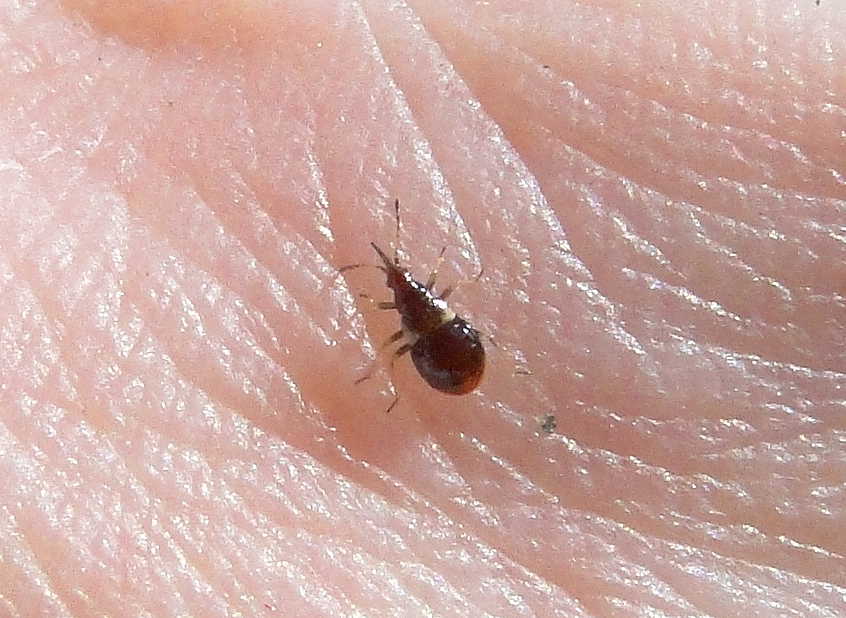
Blister Beetle


This tiny, ant-like beetle is a blister beetle of the family Meloidae – perhaps an Anthicus species, possibly Anthicius floralis – the narrow-necked harvest beetle. Like most creatures on the Island it enjoys aggravating humans. In this case it pierces the skin and injects canthadrin – a poisonous chemical which causes blistering of the skin. (Canthadrin is used medically to remove warts). For the purposes of scientific research and a better photo I allowed it to have a go at me. When not busy biting it was sprinting all over my hand which made it difficult to photograph. Once stationery and biting it was easier to photograph – the things I do for science!


I can confirm that being injected with canthadrin hurts.

Monday, 27 June 2011

Birds in the garden

 
A new bird visitor was added to the garden list today - a female Chaffinch. That makes 24 species we have seen in the garden itself (not counting those that just fly overhead).


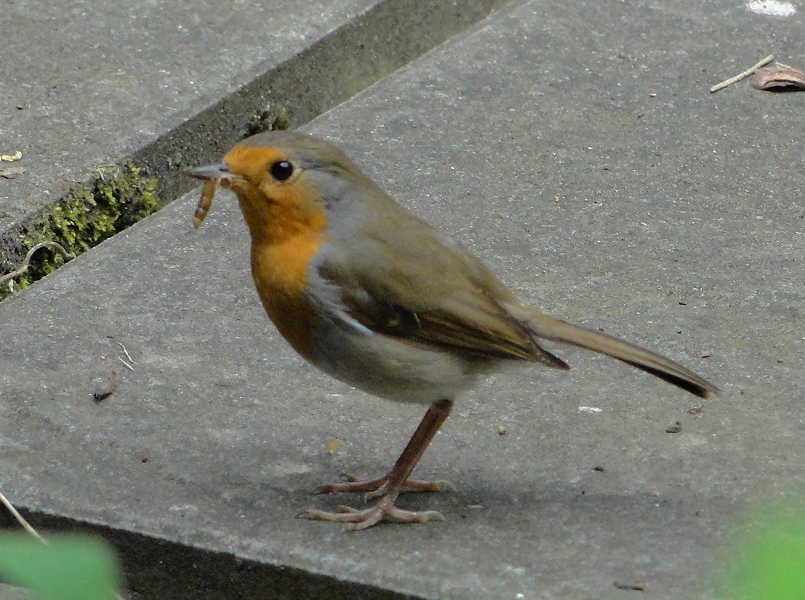
The number of species that actually nest in the garden has also increased this year and although no Collared Doves nested, as they often do, (I think the Sparrowhawk is to blame for that) we had 8 species - Robin, House Sparrow, Dunnock, Wood Pigeon, Starling, Blackbird, Great Tit and Blue Tit. Not bad for a small suburban garden.

Wednesday, 15 June 2011

Corncrakes


I have often heard Corncrakes on the Isle of Lewis and in the last time I went up there there was one creaking away in the grass between Pat and Dave's and GB's. The previous year GB and I heard a few competing with each other beside the car park by the Gearrannan Black House Village. But I have never seen one.

I knew from pictures what they looked like but nevertheless I was surprised at how small they are when I saw a stuffed Corncrake family at Chester Museum.

(It is worth recording here that when Mum was young they could be heard calling in the fields opposite her house on Queens Drive, Broad Green, Liverpool. Such has been their decline since then that one has to go to the Hebrides to have much hope of hearing one.)

Tuesday, 14 June 2011

Baby Jackdaw


A baby Jackdaw at Chirk Castle.

Friday, 10 June 2011

Hummingbird Hawkmoth


On Wednesday Brother-who-blogs took Partner-who-loves-tea and I to Chirk Castle for the day. Highlight of the day for me was not directly to do with the castle or gardens – it was a new moth species – the Hummingbird Hawkmoth.


The wings go up and down at around 70 complete beats per second which makes it hard to photograph – especially as it was on the far side of a wide border. When it decides it has had enough it can zoom off at about 30 mph - making it one of the fastest insects on the planet.


Sunday, 26 September 2010

Beefsteak Fungus


This is another fungus from my visit to Arrowe Park on 25th September - The Beefsteak Fungus (Fistulina hepatica).


Why do so many people - who would probably never pick or damage a flower - feel the need to destroy every fungus they see? So often in public parks there are damaged fungi everywhere and certainly not all can be blamed on the squirrels.  At least in this case it enabled me to positively identify them and to demonstrate why they are so called.

Sparrowhawk


I've seen plenty of Sparrowhawks over the years but despite poor light and a window in the way I got my best photos of one on 25th September.

Saturday, 25 September 2010

Rooting Brittlehead

 
I don't have a complete list of the fungi I have photographed.  I must sort them out some day.  In the meantime I thought I would put some of the recent ones on this site.  


These are the Rooting Brittlehead ( Psathyrella gracilis).  They were in Arrowe Park, Wirral, on 25th September.

Friday, 3 September 2010

Jersey Tiger

 
I briefly saw a Jersey Tiger skip past in the car park at Otter Nurseries last year.  This year one came into the garden at Frog End.

Thursday, 2 September 2010

Autumn Green Carpet


Autumn Green Carpet
 A third new species from the moth trap at Frog End.

Setaceous Hebrew Character


The Setaceous Hebrew Character was another new species for me when we ran the moth trap at Helen and Ian's.


The Purple Clay is a species that I ave previously recorded but which  do not seem to have a photo of.

Wednesday, 1 September 2010

Cypress Pug


One of the species that appeared in the moth trap at Frog End, Exeter,on 29/30th August was the Cypress Pug.  A resident species, it was first recorded in Britain in 1959 in Cornwall.  It has now spread at lest as far North as Rugby and is well established along the South Coast.

Thursday, 1 July 2010

A Psyllid


There are not many major families of British insects of which I have never photographed a representative but when I found a Psyllid (one of the Jumping Plant Lice) on an Oak leaf at Thurstaston on 30th June it proved to be a first from that family. Which one it is I do not know though it may be a Trioza species..

Saturday, 26 June 2010

Phlyctaenia coronata


I found a new garden inhabitant today - the micro-moth Phlyctaenia coronata (not the similar Phlyctaenia stachydalis).

Family: Crambidae, Subfamily: Pyraustinae.

Wingspan 22-26 mm.

Fairly common throughout England and Wales, and also Ireland, this easy to recognise species is often attracted to light.

The larvae feed on the young leaves of Elder (Sambucus nigra), Lilac (Syringa sp.) and Bindweed (Convolvulus sp.) all of which can be found in our garden. The adults can sometimes be disturbed during the day from the foodplant.

June to July is the main flight period, and the larvae hibernate during the winter, pupating in the spring.

Thursday, 14 January 2010

Fieldfares & Redwings


Two new bird species were added to the garden list on 13th January as Fieldfares and Redwings came into the garden to drink at the ponds.

Friday, 8 January 2010

Pied Wagtail


The snow brought a Pied Wagtail to The Willows. A new bird for the garden species list.

Tuesday, 15 September 2009

Painted Lady


I have been lamenting the paucity of butterflies - both in numbers and variety - this summer. However, when I looked down the lists at the side of this blog I realised that the eleven species seen at The Willows didn't include the Painted Lady, a migrant which has been in the garden this summer. So the number of species seen in the garden since we moved in five years ago has risen to twelve.